
Accountability You Can Count On
Kevin's Platform
Kevin Allen's campaign for St. Johns County School Board District 1 represents a strategic opportunity to leverage financial expertise during a critical period when voters have approved $33.2 million in new annual education funding and expect rigorous accountability for these investments. This positions Kevin as the "Financial Stewardship" candidate who can protect taxpayer investments while maintaining the district's #2 state ranking.
1. FISCAL RESPONSIBILITY AND BUDGET TRANSPARENCY
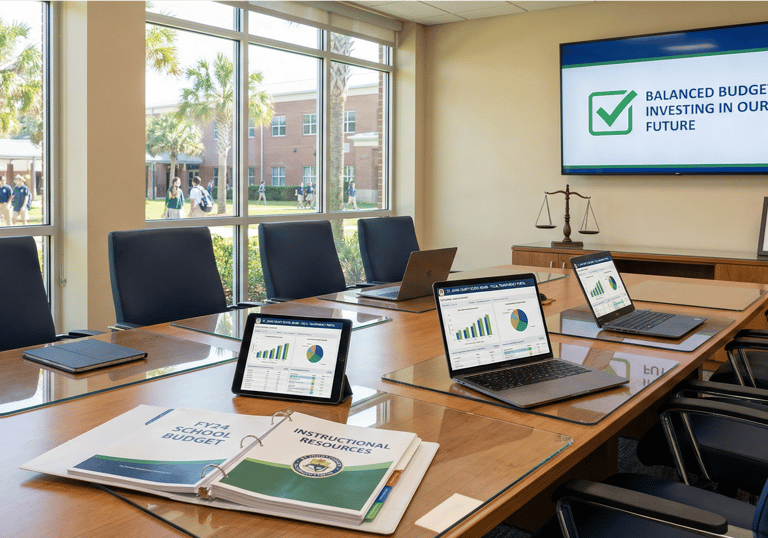
Comprehensive Budget Oversight: Implement rigorous financial controls and performance metrics to ensure every dollar of the voter-approved $33.2 million in new revenue is spent efficiently and transparently, with quarterly public reporting on fund usage and outcomes
Long-Term Financial Planning: Develop 5-year financial forecasts that account for continued student growth (currently 85% increase since 2007-08), infrastructure needs, and revenue sustainability to prevent future financial crises
Taxpayer Value Maximization: Establish cost-benefit analysis requirements for all major expenditures, competitive bidding processes for contracts over $50,000, and annual independent financial audits to ensure maximum value for taxpayer investment
2. MAINTAIN ACADEMIC EXCELLENCE AND DISTRICT RANKING
Performance Metrics and Accountability: Establish comprehensive academic performance tracking systems that monitor student achievement, teacher effectiveness, and program outcomes to ensure the district maintains its #2 state ranking while identifying areas for improvement
Strategic Resource Allocation: Use data-driven analysis to direct resources toward programs and initiatives that demonstrate measurable impact on student achievement, ensuring maximum educational return on investment
Competitive Advantage Preservation: Protect and enhance the programs that distinguish St. Johns County schools, including advanced placement offerings, dual enrollment opportunities, and specialized programs that attract families and maintain property values
Competitive Compensation Strategy: Develop comprehensive compensation packages that attract and retain high-quality teachers through strategic use of the voter-approved 1-mill tax revenue, performance incentives, and benefits optimization
Retention Analysis and Improvement: Conduct a detailed financial analysis of teacher turnover costs versus retention investments to develop cost-effective strategies for reducing attrition and maintaining institutional knowledge
Workforce Planning and Development: Implement long-term workforce planning that anticipates staffing needs based on enrollment projections, retirement patterns, and program requirements to ensure adequate staffing without budget overruns
3. TEACHER RECRUITMENT, RETENTION, AND COMPENSATION










4. INFRASTRUCTURE AND CAPITAL IMPROVEMENT MANAGEMENT
Capital Project Oversight: Implement rigorous project management and financial controls for the $91.6 million in capital funding to ensure projects are completed on time, within budget, and meet educational specifications
Debt Management Strategy: Develop comprehensive debt service planning that balances current infrastructure needs with long-term financial sustainability, optimizing the use of sales tax revenue and bond financing
Growth Planning and Capacity Management: Use enrollment projections and demographic analysis to strategically plan facility investments that accommodate growth while maximizing utilization and minimizing per-student capital costs
5. TECHNOLOGY INTEGRATION AND DIGITAL LEARNING
6. SPECIAL EDUCATION SERVICES AND COMPLIANCE
Strategic Technology Investment: Develop comprehensive technology plans that balance educational benefits with lifecycle costs, ensuring technology investments support learning objectives while providing sustainable value over time
Digital Equity and Access: Ensure all students have equal access to technology resources and digital learning opportunities regardless of socioeconomic status or school location within the district
Cybersecurity and Data Protection: Implement robust cybersecurity measures and data protection protocols that safeguard student information while enabling effective use of educational technology
Service Delivery Optimization: Analyze the cost-effectiveness of in-house versus contracted special education services to ensure students receive appropriate support while maximizing resource efficiency
Compliance and Risk Management: Implement comprehensive compliance monitoring and risk management systems to prevent costly legal challenges while ensuring all students receive required services
Family Support and Communication: Develop transparent communication systems that keep families informed about services, progress, and available resources while building trust and preventing conflicts



7. SCHOOL SAFETY AND SECURITY ENHANCEMENT
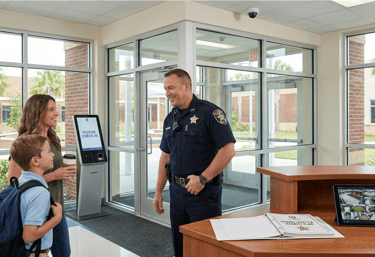
Comprehensive Security Assessment: Conduct thorough security audits of all facilities and implement cost-effective improvements that enhance safety while maximizing the impact of available security funding
Emergency Preparedness and Response: Develop comprehensive emergency response plans and training programs that prepare staff and students for various scenarios while optimizing resource allocation for maximum effectiveness
Mental Health and Prevention Services: Invest in mental health support and prevention programs that address root causes of safety concerns while providing measurable returns on investment through reduced incidents and improved school climate
8. TRANSPORTATION EFFICIENCY AND SAFETY
9. COMMUNITY ENGAGEMENT AND COMMUNICATION
Route Optimization and Efficiency: Use data analysis and technology to optimize bus routes, reduce transportation costs, and improve service reliability while maintaining safety standards
Fleet Management and Maintenance: Implement comprehensive fleet management systems that minimize maintenance costs, extend vehicle life, and ensure reliable service through preventive maintenance and strategic replacement planning
Driver Recruitment and Retention: Develop competitive compensation and working condition improvements that attract and retain qualified bus drivers while managing transportation labor costs
Transparent Communication Systems: Develop comprehensive communication strategies that keep families and community members informed about district operations, budget decisions, and educational outcomes through cost-effective channels
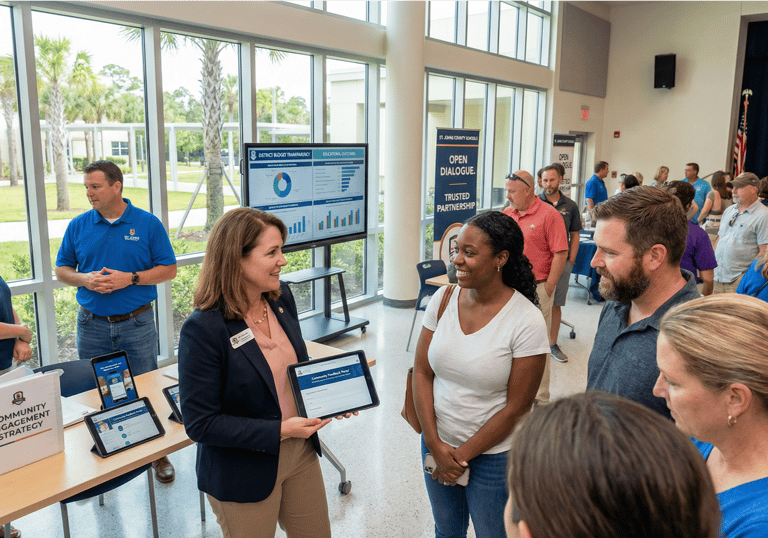
Stakeholder Engagement and Feedback: Implement systematic approaches to gathering and responding to community input that inform decision-making while building support for district initiatives
Public Relations and Reputation Management: Maintain positive community relationships and manage district reputation through proactive communication and responsive customer service that protects the district's valuable brand

10. EXTRACURRICULAR PROGRAMS AND STUDENT ACTIVITIES
Program Sustainability and Funding: Develop sustainable funding models for extracurricular programs that balance district support with user fees, fundraising, and community partnerships to ensure program viability without excessive burden on the general fund
Participation Equity and Access: Ensure all students have opportunities to participate in extracurricular activities regardless of economic circumstances through strategic fee structures and financial assistance programs
Educational Value and Outcomes: Evaluate extracurricular programs based on their contribution to student development, academic achievement, and college/career readiness to ensure investments provide measurable educational benefits
Financial Expertise for Educational Excellence
Credential: Strong financial background in an era of complex budget challenges
Timing: Voters just approved significant tax increases, creating accountability expectations
Differentiation: Most school board candidates lack sophisticated financial management experience
Value: Can optimize resource allocation and prevent wasteful spending
1. Financial Expertise Advantage
2. Taxpayer Accountability Champion
Message: "Protecting Your Investment in Education"
Appeal: Taxpayers just approved new funding, but demand results
Credibility: Financial background provides authentic expertise for oversight and management roles
Outcome: Building trust through transparent, data-driven decision making
Kevin Allen brings proven financial management experience to school board leadership at a critical time when St. Johns County voters have approved $33.2 million in new annual revenue and expect rigorous accountability for these investments. His financial background provides unique qualifications for stewarding taxpayer resources while maintaining the district's #2 state ranking.
4. Natural Connection to Parent Concerns
Approach: Business-minded problem solving for educational challenges
Focus: Measurable outcomes and performance metrics
Style: Collaborative but decisive leadership based on data analysis
Goal: Maintain academic excellence while improving operational efficiency
Expertise: Demonstrate broader expertise in governance and financial management
Understanding: Grasp of parent concerns while offering practical solutions
Position: Personal experience enables more effective advocacy for students
Credibility: Authentic parent perspective with grassroots commitment to financial management
3. Results-Oriented Leadership
What does Kevin Allen offer to the residents of St. Johns County?
Kevin Allen for School Board, District 1
kevin@kevinallenforschoolboard.com
516-695-0122
Bringing financial expertise, transparency, and accountability to St. Johns County schools. Ensuring every taxpayer dollar is spent wisely for the benefit of our students and teachers.
Paid for by Kevin Allen for St. Johns County School Board, District 1